We are out of the office until about Oct. 31.
Your order will be processed after we return.
 ON-LINE ORDER FORM Alphabetical Listings
Coins by theme or topic
New Arrivals
World Coin Sets List
Site Map
Home Page
ON-LINE ORDER FORM Alphabetical Listings
Coins by theme or topic
New Arrivals
World Coin Sets List
Site Map
Home Page |
|
ON-LINE ORDER FORM Alphabetical Listings
Coins by theme or topic
New Arrivals
World Coin Sets List
Site Map
Home Page |
STOCK
& BOND CERTIFICATES HAVE MOVED TO THEIR OWN PAGEBOOKS ABOUT TOKENS AND MEDALS 19th
CENTURY SINGAPORE COCK TOKEN
19th
CENTURY SINGAPORE COCK TOKEN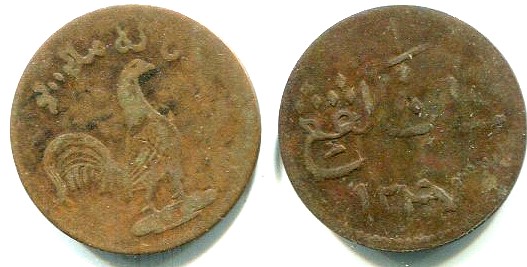 These
copper tokens were struck in England for merchants in Singapore in the
first half of the 19th century. British East India Company
which ruled Singapore failed to provide appropriate coinage so
merchants had their own made. They were widely used in Singapore and
surrounding areas. A rooster is depicted on one side. The
other side has Arabic legends with the denomination "1 Keping" the AH
date "1347" which corresponds to 1831AD and the legend "land of the
Malays". The coins did not specify an actual country in order
to avoid getting in trouble with government authorities. The
tokens tend to be weakly struck. Hundreds of varieties are
known. The KM Standard Catalog of World Coins lists these
under "Malay Peninsula - Malacca".RARE
CALCUTTA MINT CANTEEN TOKENS
These
copper tokens were struck in England for merchants in Singapore in the
first half of the 19th century. British East India Company
which ruled Singapore failed to provide appropriate coinage so
merchants had their own made. They were widely used in Singapore and
surrounding areas. A rooster is depicted on one side. The
other side has Arabic legends with the denomination "1 Keping" the AH
date "1347" which corresponds to 1831AD and the legend "land of the
Malays". The coins did not specify an actual country in order
to avoid getting in trouble with government authorities. The
tokens tend to be weakly struck. Hundreds of varieties are
known. The KM Standard Catalog of World Coins lists these
under "Malay Peninsula - Malacca".RARE
CALCUTTA MINT CANTEEN TOKENS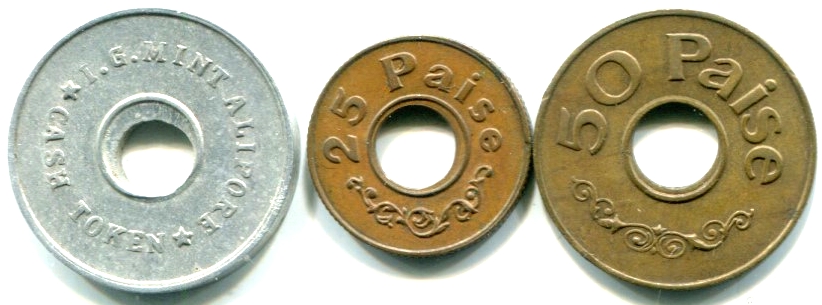 In
order to prevent workers from stealing the coins some mints issued
special tokens for use by workers within the mint.. They are
rarely seen outside of the mints. The Alipore Mint, in India, also
called the Calcutta (Kolkata) Mint, issued an aluminum 10 Paisa and
brass 25 and 50 Paisa tokens in the 1960's for use within the mint. The
tokens have the denomination on one side and the inscription "I.G. MINT
ALIPORE * CASH TOKEN *" on the other. I.G. Mint stands for
India Government Mint.
SAN FRANCISCO MINT TOKENSSIAMESE
PORCELAIN MONEY
In
order to prevent workers from stealing the coins some mints issued
special tokens for use by workers within the mint.. They are
rarely seen outside of the mints. The Alipore Mint, in India, also
called the Calcutta (Kolkata) Mint, issued an aluminum 10 Paisa and
brass 25 and 50 Paisa tokens in the 1960's for use within the mint. The
tokens have the denomination on one side and the inscription "I.G. MINT
ALIPORE * CASH TOKEN *" on the other. I.G. Mint stands for
India Government Mint.
SAN FRANCISCO MINT TOKENSSIAMESE
PORCELAIN MONEY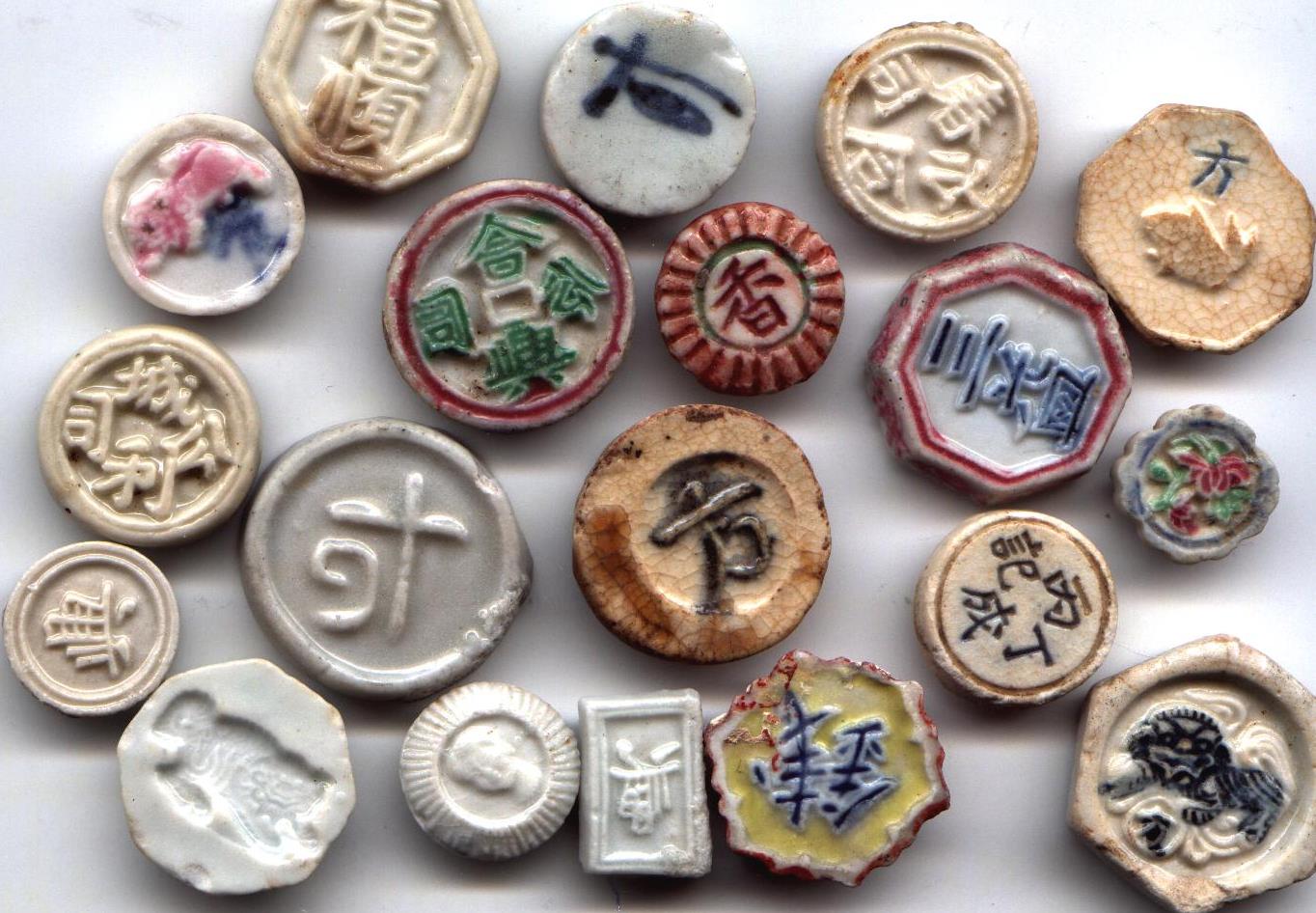 These porcelain gaming tokens, called
Pees, were issued by Chinese owned gambling houses in Siam during the
18th and 19th centuries. There circulated as money due to a shortage of
small change. After a period of time the gambling houses would recall
the tokens and they would be declared valueless, resulting in a
substantial profit to the issuer.
These porcelain gaming tokens, called
Pees, were issued by Chinese owned gambling houses in Siam during the
18th and 19th centuries. There circulated as money due to a shortage of
small change. After a period of time the gambling houses would recall
the tokens and they would be declared valueless, resulting in a
substantial profit to the issuer. 

 The
Casino de Vichy was built in 1865 at the request of French Emperor
Napoleon III. It included a theater, billiards, and
reading rooms. The casino and theater were expanded in the
early 20th century, becoming one of the largest and most important
casinos in France. It was also known as the Grand Casino de
Vichy. It was in the theater in 1940 that the French
parliament voted to give Marshal Petan and his collaborationist regime
full power to rule what was called Vichy
France, The Casino closed was
by 1995, The theater has been updated and is now called Opera de Vichy
where it hosts major performances. These shellac casino chips have
multiple colored inserts and have the same design on both sides The
ivory colored 100 Francs and blue 200 Francs are 39.5mm. They were
probably used from the late 1940's to the late 1950's. The
1000 Francs was revalued to 10 New Francs and was used in the early
1960's. The yellow chip is 51.5mm. The chips are individually
numbered. All numbers are 4 digits, so I doubt there are many
still around.
The
Casino de Vichy was built in 1865 at the request of French Emperor
Napoleon III. It included a theater, billiards, and
reading rooms. The casino and theater were expanded in the
early 20th century, becoming one of the largest and most important
casinos in France. It was also known as the Grand Casino de
Vichy. It was in the theater in 1940 that the French
parliament voted to give Marshal Petan and his collaborationist regime
full power to rule what was called Vichy
France, The Casino closed was
by 1995, The theater has been updated and is now called Opera de Vichy
where it hosts major performances. These shellac casino chips have
multiple colored inserts and have the same design on both sides The
ivory colored 100 Francs and blue 200 Francs are 39.5mm. They were
probably used from the late 1940's to the late 1950's. The
1000 Francs was revalued to 10 New Francs and was used in the early
1960's. The yellow chip is 51.5mm. The chips are individually
numbered. All numbers are 4 digits, so I doubt there are many
still around. LEPER
COLONY COIN FROM COLOMBIA
LEPER
COLONY COIN FROM COLOMBIA Leprosy
was once a dreaded and incurable disease. It was once thought
that Leprosy could be spread by contaminated coins. To prevent this,
Colombia issued special coins for government run leper colonies. This
Colombia Leper colony 1921 2 Centavos is a copper-nickel coin featuring
a large cross with the word “LAZARETO”
(Leper) on one side and the
denomination on the other. It was later discovered that leprosy was not
spread by money and the introduction of antibiotics made leper colonies
unnecessary.
Leprosy
was once a dreaded and incurable disease. It was once thought
that Leprosy could be spread by contaminated coins. To prevent this,
Colombia issued special coins for government run leper colonies. This
Colombia Leper colony 1921 2 Centavos is a copper-nickel coin featuring
a large cross with the word “LAZARETO”
(Leper) on one side and the
denomination on the other. It was later discovered that leprosy was not
spread by money and the introduction of antibiotics made leper colonies
unnecessary.  In
the 19th and early 20th Century cattle ranches in Uruguay issued tokens
to pay workers. Of course, they could only be used at the ranch's
pulperia, which was a general store and bar. To assist
ranchers who could not afford have their own tokens minted, Uruguay
issued generic tokens on which ranches could stamp their own
brand. One side has the legend "REPUBLICA ORIENTAL DEL URUGUAY"
and the denomination. The other side has the legend "ESTABLECIMIENTO DE GANADERIA"
(Livestock Farm) and an area in the center for the ranch's
brand. Sometimes a ranch would overstamp the denomination
with their brand as well. We have these historic generic
Uruguay aluminum tokens with an elaborate XX brand.
In
the 19th and early 20th Century cattle ranches in Uruguay issued tokens
to pay workers. Of course, they could only be used at the ranch's
pulperia, which was a general store and bar. To assist
ranchers who could not afford have their own tokens minted, Uruguay
issued generic tokens on which ranches could stamp their own
brand. One side has the legend "REPUBLICA ORIENTAL DEL URUGUAY"
and the denomination. The other side has the legend "ESTABLECIMIENTO DE GANADERIA"
(Livestock Farm) and an area in the center for the ranch's
brand. Sometimes a ranch would overstamp the denomination
with their brand as well. We have these historic generic
Uruguay aluminum tokens with an elaborate XX brand. Prior
to the introduction of a national coinage in 1858, Canadians depended
upon privately issued tokens supply small change.
From 1850 until 1857 the Bank of Upper Canada, which was based in
Toronto, issued attractive 1/2 Penny and 1 Penny tokens. The
obverse depiced St. George slaying the Dragon. The
reverse depicts the arms of Upper Canada. Upper Canada was
established as a British colony in 1791 for loyalists fleeing the
American Revolution. Upper refered to its geographic position north of
the Great Lakes and St. Lawrence River. The Bank of Upper Canada was
chartered in 1821. For many years it help a monopoly on
banking in the province and was closely linked to top government
officials. In 1850 it became the official bank of the
Province of Canada. In the 1850's it recklessly
speculated in land and railway. After the depresson of 1857
and losing the the government account in 1864 it went bankrupt in 1866
Prior
to the introduction of a national coinage in 1858, Canadians depended
upon privately issued tokens supply small change.
From 1850 until 1857 the Bank of Upper Canada, which was based in
Toronto, issued attractive 1/2 Penny and 1 Penny tokens. The
obverse depiced St. George slaying the Dragon. The
reverse depicts the arms of Upper Canada. Upper Canada was
established as a British colony in 1791 for loyalists fleeing the
American Revolution. Upper refered to its geographic position north of
the Great Lakes and St. Lawrence River. The Bank of Upper Canada was
chartered in 1821. For many years it help a monopoly on
banking in the province and was closely linked to top government
officials. In 1850 it became the official bank of the
Province of Canada. In the 1850's it recklessly
speculated in land and railway. After the depresson of 1857
and losing the the government account in 1864 it went bankrupt in 1866 Meat
was rationed in Canada during World War II. Families received
a ration booklet which allowed them to purchase a limited quantity of
rationed goods, including tea, coffee, sugar, butter, booze and meat
each week. Each weekly meat ration coupon was good for 2
pounds of meat. The problem was that many did not have
refrigeration at home, so they would either forfeit the whole coupon
for a lesser amount of meat, or buy their full amount and risk it going
bad before it could be used. In 1945 the Canadian government
finally wised up and issued meat ration tokens that were good for a
lesser quantity of meat. Each token was worth 1/8 of a meat ration
coupon (1/4 pound of meat), so if someone bought less than their full
ration of meat the tokens could be given out to be used
later. If one bought half their weekly ration of meat, they
would receive four tokens for later use. The 22mm blue token
is struck on a heavy blue cardboard with a center hole. Both sides have
the same design with the words "CANADA
- RATION MEAT - VIANDE" and two
maple leaves.
Meat
was rationed in Canada during World War II. Families received
a ration booklet which allowed them to purchase a limited quantity of
rationed goods, including tea, coffee, sugar, butter, booze and meat
each week. Each weekly meat ration coupon was good for 2
pounds of meat. The problem was that many did not have
refrigeration at home, so they would either forfeit the whole coupon
for a lesser amount of meat, or buy their full amount and risk it going
bad before it could be used. In 1945 the Canadian government
finally wised up and issued meat ration tokens that were good for a
lesser quantity of meat. Each token was worth 1/8 of a meat ration
coupon (1/4 pound of meat), so if someone bought less than their full
ration of meat the tokens could be given out to be used
later. If one bought half their weekly ration of meat, they
would receive four tokens for later use. The 22mm blue token
is struck on a heavy blue cardboard with a center hole. Both sides have
the same design with the words "CANADA
- RATION MEAT - VIANDE" and two
maple leaves.  This
unusual token is in the shape of a head of a cow! It is good
for 1 Quart of milk from the MacNicolls Dairy in Brantford,
Ontario. The aluminum token is 37mm and probably dates from
the 1940's. Milk tokens would be purchased in
advanced. Tokens would then be left for the milkman for
however many quarts a customer desired. It was safer than
leaving cash and avoided complicated billing.
This
unusual token is in the shape of a head of a cow! It is good
for 1 Quart of milk from the MacNicolls Dairy in Brantford,
Ontario. The aluminum token is 37mm and probably dates from
the 1940's. Milk tokens would be purchased in
advanced. Tokens would then be left for the milkman for
however many quarts a customer desired. It was safer than
leaving cash and avoided complicated billing.  A
sheep is depicted on this 23mm copper token from the Larraundarra
hacienda. Larraundarra was located near the tiny hamlet of
Cuaro (population 110) in the sparsely populated Artigas Department in
northern Uruguay. The obverse of the token has the name and
location of the hacienda and the value 1, representing 1 fleece. A
token would be given to workers for each sheep shorn. The
token probably dates from the late 19th to early 20th
century.
A
sheep is depicted on this 23mm copper token from the Larraundarra
hacienda. Larraundarra was located near the tiny hamlet of
Cuaro (population 110) in the sparsely populated Artigas Department in
northern Uruguay. The obverse of the token has the name and
location of the hacienda and the value 1, representing 1 fleece. A
token would be given to workers for each sheep shorn. The
token probably dates from the late 19th to early 20th
century.  Most
plantation tokens tended to have rather simple designs consisting of
just lettering and maybe a simple image. This unusual token of the
Sociedad Alvarado-Chacon features a good portrait of the owner Santiago
Alvarado Ramírez, who lived from 1841 until 1933. The
Sociedad was a holding company for his eight coffee plantations Costa
Rica that all used this token. The 26mm brass token is
denominated as 1 Real. Though Costa Rica officially stopped
using Reals in 1865 when they switched to a decimal system, plantations
continued to pay their workers in Reals, with 1 Real worth 1/8 of a
Colon. The tokens are somewhat corroded and have been
cleaned.
Most
plantation tokens tended to have rather simple designs consisting of
just lettering and maybe a simple image. This unusual token of the
Sociedad Alvarado-Chacon features a good portrait of the owner Santiago
Alvarado Ramírez, who lived from 1841 until 1933. The
Sociedad was a holding company for his eight coffee plantations Costa
Rica that all used this token. The 26mm brass token is
denominated as 1 Real. Though Costa Rica officially stopped
using Reals in 1865 when they switched to a decimal system, plantations
continued to pay their workers in Reals, with 1 Real worth 1/8 of a
Colon. The tokens are somewhat corroded and have been
cleaned.  Ramatankas
are a type of temple tokens that were used in
India between the mid-19th and mid-20th Century. The
privately minted tokens were sold or distributed at temples and
bazaars. They were often given as gifts and would be treasured by
families. Most are made from brass or silver-plated brass and
tend to be crudely engraved. The most common types featured a scene
from the ancient Hindu epoch poem called the Ramayana on the
obverse. It depicts Rama and his wife Sita, seated on a
platform (Durbar) holding court. To their right are their
sons Kusha and Lava. An attendant holding a parasol is on their
left. Beneath is Hanuman, the monkey god. The other side
features Rama and his brother Lakshmana standing.
The coins
often bear a false date, making some believe they are quite old.
The date has nothing to do when the token was
actually struck, but instead has a numerical significance.
After World War
II the use of the Rama Tankas died out.
Ramatankas
are a type of temple tokens that were used in
India between the mid-19th and mid-20th Century. The
privately minted tokens were sold or distributed at temples and
bazaars. They were often given as gifts and would be treasured by
families. Most are made from brass or silver-plated brass and
tend to be crudely engraved. The most common types featured a scene
from the ancient Hindu epoch poem called the Ramayana on the
obverse. It depicts Rama and his wife Sita, seated on a
platform (Durbar) holding court. To their right are their
sons Kusha and Lava. An attendant holding a parasol is on their
left. Beneath is Hanuman, the monkey god. The other side
features Rama and his brother Lakshmana standing.
The coins
often bear a false date, making some believe they are quite old.
The date has nothing to do when the token was
actually struck, but instead has a numerical significance.
After World War
II the use of the Rama Tankas died out. Many
churches in Scotland and England would hold Holy Communion only
once a year or less. Only those deemed worthy were allowed to partake.
Those worthy were given a special token, which had to be presented in
order to take communion. Being worthy was often
associated with financial contributions. This communion token
dated 1838 was issued by the Established Church of Scotland in the
small village of Monzie in Perthshire in central Scotland.
Today little remains of Monzie other than a castle, some Bed and
Breakfasts and the church which no longer holds regular
services. The 29mm x 19mm pewter token has “MONZIE” on one
side and the date on the other. In 1843 the minister and a
majority of the members of the Monzie Church resigned in order to form
the Monzie Free Church, taking part in The Great Disruption.
The Free Church of Scotland broke away from the Church of Scotland
because of their opposition to the power of local landowners having the
right to appoint the ministers to a parish
Many
churches in Scotland and England would hold Holy Communion only
once a year or less. Only those deemed worthy were allowed to partake.
Those worthy were given a special token, which had to be presented in
order to take communion. Being worthy was often
associated with financial contributions. This communion token
dated 1838 was issued by the Established Church of Scotland in the
small village of Monzie in Perthshire in central Scotland.
Today little remains of Monzie other than a castle, some Bed and
Breakfasts and the church which no longer holds regular
services. The 29mm x 19mm pewter token has “MONZIE” on one
side and the date on the other. In 1843 the minister and a
majority of the members of the Monzie Church resigned in order to form
the Monzie Free Church, taking part in The Great Disruption.
The Free Church of Scotland broke away from the Church of Scotland
because of their opposition to the power of local landowners having the
right to appoint the ministers to a parish For many years, Israel required tokens
to operate their public telephones. The tokens made it easy
to raise prices and helped cut down on slugs beings. This
Israeli telephone token, called an Asimon, was issued by the Israel
Post. One side is dated 1966 in Hebrew and has the world
“telephone” in Hebrew and Arabic. A deep slot and a center
hole is incorporated into the token to prevent regular coins or slugs
from being used in the telephone. The other side features a
telephone dial.
For many years, Israel required tokens
to operate their public telephones. The tokens made it easy
to raise prices and helped cut down on slugs beings. This
Israeli telephone token, called an Asimon, was issued by the Israel
Post. One side is dated 1966 in Hebrew and has the world
“telephone” in Hebrew and Arabic. A deep slot and a center
hole is incorporated into the token to prevent regular coins or slugs
from being used in the telephone. The other side features a
telephone dial.
 Admiral
Miguel Grau is one of Peru's most honored heroes. As captain
of the Huáscar, during the War of The Pacific between Peru and Bolivia
against Chile repeatedly attacked the vastly superior Chilean navy. He
severely disrupted the Chilean lines of supply and communication,
capturing or damaging a number of Chilean vessels. He was called the
"Gentleman of the Seas" for his chivalrous treatment of his
enemies. He was killed in action and his ship captured in the
Battle of Angamos on October 1879. In 1934 Peru decided to
build monuments to Grau in Lima and Piura, the city where he was
born. This copper 20 Centavos token was struck to help raise
funds to build the monuments. The 20mm token features the arms of Peru
and the legend "FONDOS
PRO MONUMENTOS GRAU" (Money for Grau Monument). The other
side features the denomination and the date October 8, 1935.
Admiral
Miguel Grau is one of Peru's most honored heroes. As captain
of the Huáscar, during the War of The Pacific between Peru and Bolivia
against Chile repeatedly attacked the vastly superior Chilean navy. He
severely disrupted the Chilean lines of supply and communication,
capturing or damaging a number of Chilean vessels. He was called the
"Gentleman of the Seas" for his chivalrous treatment of his
enemies. He was killed in action and his ship captured in the
Battle of Angamos on October 1879. In 1934 Peru decided to
build monuments to Grau in Lima and Piura, the city where he was
born. This copper 20 Centavos token was struck to help raise
funds to build the monuments. The 20mm token features the arms of Peru
and the legend "FONDOS
PRO MONUMENTOS GRAU" (Money for Grau Monument). The other
side features the denomination and the date October 8, 1935.  This
23mm aluminum
“Good for 10 Cents in Trade” token was issued by Frazer’s
Tavern, 201 West Illinois St. in Evansville, Indiana. The full address
is on the token. It
operated from 1939 to 1977. A bar continued to operate
there until at least 2010. The brick building has since been
torn down and the address is now an empty lot. The token was
probably issued between the
1940’s and the early 1960’s, when a drink could be purchased for 10
cents.
This
23mm aluminum
“Good for 10 Cents in Trade” token was issued by Frazer’s
Tavern, 201 West Illinois St. in Evansville, Indiana. The full address
is on the token. It
operated from 1939 to 1977. A bar continued to operate
there until at least 2010. The brick building has since been
torn down and the address is now an empty lot. The token was
probably issued between the
1940’s and the early 1960’s, when a drink could be purchased for 10
cents. On
May 25, 1961, President Kennedy set the goal of "landing a man on the
Moon and returning him safely to the Earth". This was fulfilled eight
years later, on July 20, 1969. I was at the Boy Scout
National Jamboree in Idaho on that day. In 2005
President George W. Bush set the goal of returning to the moon no later
than 2020. This still has not been accomplished 17 years
later despite having better materials, computers and
technology. It seems America has lost its mojo.
Important
ventures are delayed or killed by a thousand cuts from bureaucrats,
politicians and excessive regulation. This 35mm
aluminum medal was struck for sale in Canada shortly after the Apollo
11 moon landing. The obverse features the busts of astronauts
Aldrin, Armstrong and Collins. The reverse depicts the Lunar Module on
the moon and the legend “THE
FIRST MEN ON THE MOON” “JULY 20, 1969” in
both English and French. It is a memento of an historic event
that took place over half a century ago.
On
May 25, 1961, President Kennedy set the goal of "landing a man on the
Moon and returning him safely to the Earth". This was fulfilled eight
years later, on July 20, 1969. I was at the Boy Scout
National Jamboree in Idaho on that day. In 2005
President George W. Bush set the goal of returning to the moon no later
than 2020. This still has not been accomplished 17 years
later despite having better materials, computers and
technology. It seems America has lost its mojo.
Important
ventures are delayed or killed by a thousand cuts from bureaucrats,
politicians and excessive regulation. This 35mm
aluminum medal was struck for sale in Canada shortly after the Apollo
11 moon landing. The obverse features the busts of astronauts
Aldrin, Armstrong and Collins. The reverse depicts the Lunar Module on
the moon and the legend “THE
FIRST MEN ON THE MOON” “JULY 20, 1969” in
both English and French. It is a memento of an historic event
that took place over half a century ago.  Item
MAUI09
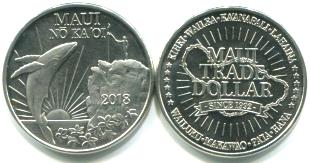
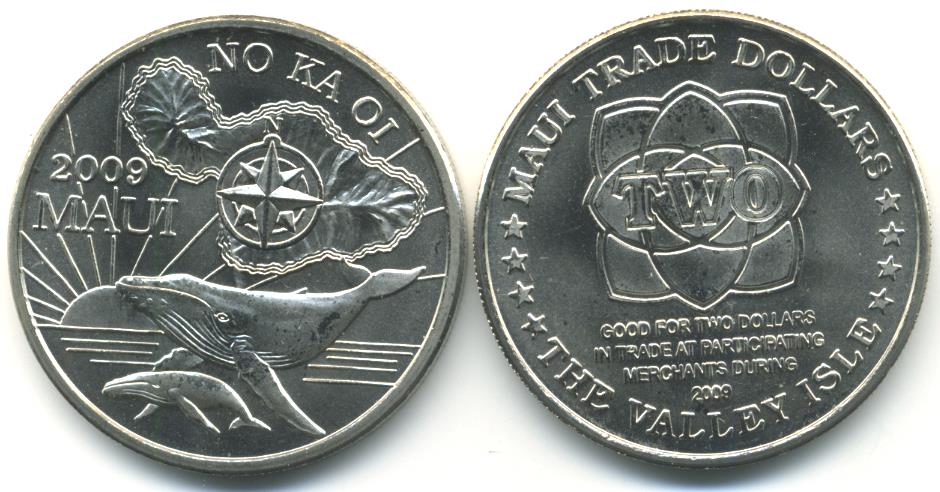
MAUI 2009 TRADE DOLLAR, NAP & WHALES UNC.$6.00;Item
MAUI06
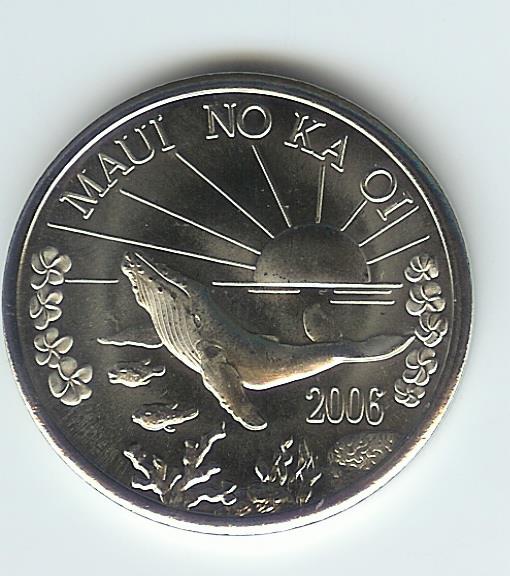
MAUI 2006 TRADE DOLLAR WHALE UNC.$6.00;Item
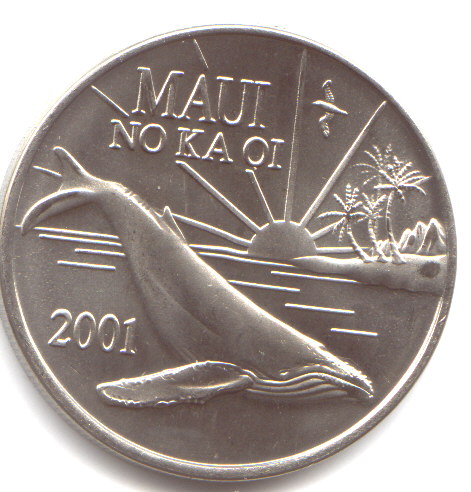
MAUI01
MAUI 2001 TRADE DOLLAR WHALE UNC.$6.00;Item
MAUI97
MAUI 1997 TRADE DOLLAR WHALES UNC.$6.00;Item
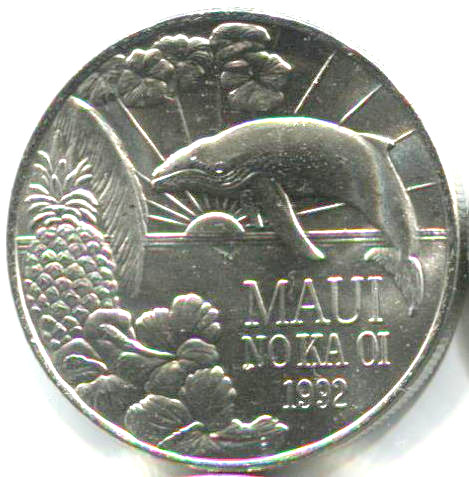
MAUI92
MAUI 1992 TRADE DOLLAR WHALE UNC.$6.00NEW 2026 CALIFORNIA
GOLDBACK NOTES
Item
MAUI09
MAUI 2009 TRADE DOLLAR, NAP & WHALES UNC.$6.00;Item
MAUI06
MAUI 2006 TRADE DOLLAR WHALE UNC.$6.00;Item
MAUI01
MAUI 2001 TRADE DOLLAR WHALE UNC.$6.00;Item
MAUI97
MAUI 1997 TRADE DOLLAR WHALES UNC.$6.00;Item
MAUI92
MAUI 1992 TRADE DOLLAR WHALE UNC.$6.00NEW 2026 CALIFORNIA
GOLDBACK NOTES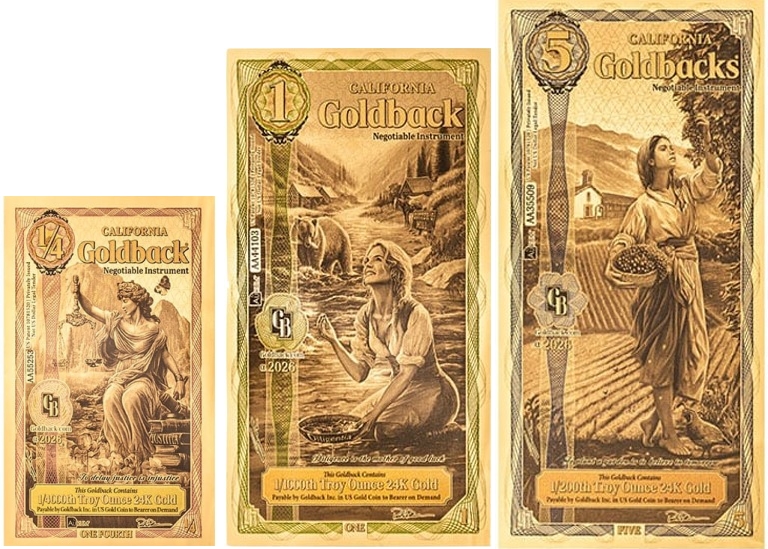 CALIFORNIA REPUBLIC $20 COIN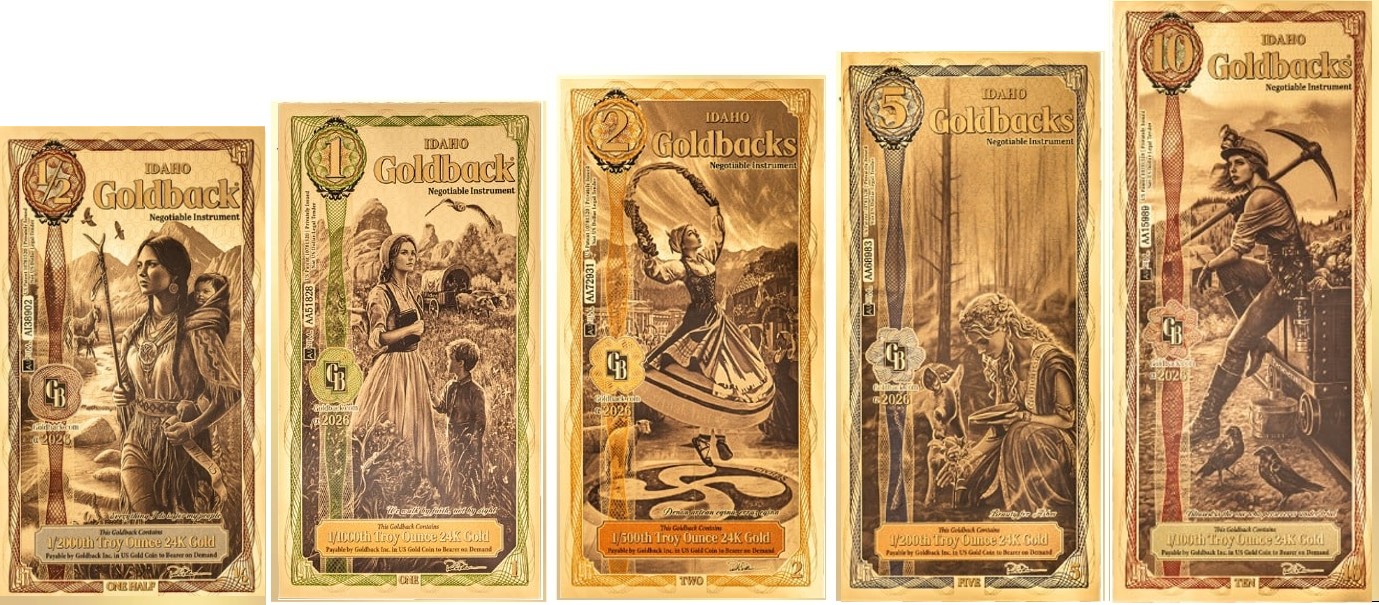
 ARIZONA 20 DOLLARS 2020 PROOF
The 1/2
Oklahoma Goldback celebrates Honestas or
Honesty through the determined figure of a young cowgirl guiding her
herd along
the historic Chisholm Trail near Red River Station.
 Like
most mints, the San Francisco mint prohibited employees from possessing
coins while working in the mint in order to reduce the opportunity for
theft. These brass tokens were used during the
1980’s and 1990’s for vending machines and the canteen inside the
mint. One side depicts an American eagle surrounded
by stars. The other side has the legends "BUSINESS ENTERPRISE
PROGRAM” "CALIF” "1984" and the
denomination. The sizes of the tokens are slightly smaller
than their corresponding U.S. coin: The 5 cents is 20mm, 10 cents is
16.5mm and the 25 cents is 23mm. Similar tokens, dated 1985,
were used in California prisons. RARE CALCUTTA (ALIPORE) MINT CANTEEN TOKENS:10, 25 & 50 PAISA
Like
most mints, the San Francisco mint prohibited employees from possessing
coins while working in the mint in order to reduce the opportunity for
theft. These brass tokens were used during the
1980’s and 1990’s for vending machines and the canteen inside the
mint. One side depicts an American eagle surrounded
by stars. The other side has the legends "BUSINESS ENTERPRISE
PROGRAM” "CALIF” "1984" and the
denomination. The sizes of the tokens are slightly smaller
than their corresponding U.S. coin: The 5 cents is 20mm, 10 cents is
16.5mm and the 25 cents is 23mm. Similar tokens, dated 1985,
were used in California prisons. RARE CALCUTTA (ALIPORE) MINT CANTEEN TOKENS:10, 25 & 50 PAISA This
attractive 38.9 mm medal commemorating General Douglas MacArthur was
struck shortly after his death in 1964 by Capitol Medals. The obverse
pictures the General. The reverse has two of his most famous quotes: "I shall Return" and
"Old soldiers never die;
they just fade away". The oxidized
silver-plated bronze medal comes in an envelope with a descriptive
brochure.
This
attractive 38.9 mm medal commemorating General Douglas MacArthur was
struck shortly after his death in 1964 by Capitol Medals. The obverse
pictures the General. The reverse has two of his most famous quotes: "I shall Return" and
"Old soldiers never die;
they just fade away". The oxidized
silver-plated bronze medal comes in an envelope with a descriptive
brochure. 
 The
1939 Golden Gate International Exposition was a World's Fair held
on Treasure Island in San Francisco
Bay. One side of this 32mm aluminum medal
features the official seal of the Exposition, which incorporates the
newly constructed San Francisco - Oakland Bay Bridge and the 400 foot
"Tower of the Sun". The other side of the medal
features both a steam and diesel-electric locomotive engine and the
logo of the Union Pacific Railroad. The legend
around the rim reads "ROAD
OF THE STREAMLINERS AND THE
CHALLENGERS" "UNION
PACIFIC"
. Below the
Union Pacific Shield is the legend "ALUMINUM
IN THESE / FAMOUS TRAINS /
FURNISHED BY / ALUMINUM COMPANY OF
AMERICA". The Streamliner
was a
streamlined light-weight diesel-electric passenger locomotive that was
introduced in 1934. The Challenger was a huge
articulated 4-6-6-4 steam locomotive that was introduced in
1936. It was nearly 122 feet (37 meters) long and weighed
more than a million pounds (450,000 kg.). This medal has long
been popular with train buffs, world's fair collectors. as well as
numismatists. It is in Uncirculated condition. I have seen
this
offered elsewhere for as much as $45 each. Our price is MUCH
less for this popular and attractive medal.
The
1939 Golden Gate International Exposition was a World's Fair held
on Treasure Island in San Francisco
Bay. One side of this 32mm aluminum medal
features the official seal of the Exposition, which incorporates the
newly constructed San Francisco - Oakland Bay Bridge and the 400 foot
"Tower of the Sun". The other side of the medal
features both a steam and diesel-electric locomotive engine and the
logo of the Union Pacific Railroad. The legend
around the rim reads "ROAD
OF THE STREAMLINERS AND THE
CHALLENGERS" "UNION
PACIFIC"
. Below the
Union Pacific Shield is the legend "ALUMINUM
IN THESE / FAMOUS TRAINS /
FURNISHED BY / ALUMINUM COMPANY OF
AMERICA". The Streamliner
was a
streamlined light-weight diesel-electric passenger locomotive that was
introduced in 1934. The Challenger was a huge
articulated 4-6-6-4 steam locomotive that was introduced in
1936. It was nearly 122 feet (37 meters) long and weighed
more than a million pounds (450,000 kg.). This medal has long
been popular with train buffs, world's fair collectors. as well as
numismatists. It is in Uncirculated condition. I have seen
this
offered elsewhere for as much as $45 each. Our price is MUCH
less for this popular and attractive medal. The
Miracle City Mall was a large (275,000 square feet - 25,500 m2) indoor
shopping mall in Titusville, Florida. Built in 1969, it was
the closest shopping mall to the Kennedy Space Center. It
thrived for years; however with the recession, the end of the Space
Shuttle program and changes in shopping habits, the aging mall lost its
tenants and was closed in January 2013. It soon became an
empty eyesore. In 2015 the Mall was demolished and
construction of new shopping center, named Titus Landing, was begun on
the site. A 39mm aluminum medal was issued to commemorate the
transition. One side depicts the old Miracle City Mall sign,
and the dates 1969-2015. The other features the logo of the
new Titus Landing center. Both sides bear the name of the
city, Titusville Florida.
The
Miracle City Mall was a large (275,000 square feet - 25,500 m2) indoor
shopping mall in Titusville, Florida. Built in 1969, it was
the closest shopping mall to the Kennedy Space Center. It
thrived for years; however with the recession, the end of the Space
Shuttle program and changes in shopping habits, the aging mall lost its
tenants and was closed in January 2013. It soon became an
empty eyesore. In 2015 the Mall was demolished and
construction of new shopping center, named Titus Landing, was begun on
the site. A 39mm aluminum medal was issued to commemorate the
transition. One side depicts the old Miracle City Mall sign,
and the dates 1969-2015. The other features the logo of the
new Titus Landing center. Both sides bear the name of the
city, Titusville Florida.
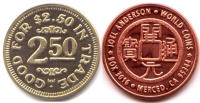 To
celebrate our 25th
anniversary in the coin business, in 1995 we struck two
tokens, a brass "Good
For
$2.50 in Trade" and a bronze-plated zinc "Good for 50c in Trade".
Each had
a mintage of 3000 pieces. We used these as gift certificates,
for small refunds and in promotions for our mail catalogs.
Because these show our old Merced address we no longer issue
them, however you may still purchase or redeem them at face
value.
To
celebrate our 25th
anniversary in the coin business, in 1995 we struck two
tokens, a brass "Good
For
$2.50 in Trade" and a bronze-plated zinc "Good for 50c in Trade".
Each had
a mintage of 3000 pieces. We used these as gift certificates,
for small refunds and in promotions for our mail catalogs.
Because these show our old Merced address we no longer issue
them, however you may still purchase or redeem them at face
value. We issued commemorative medals to
celebrate our
25th Wedding anniversary in July. One side shows a pair of
wedding bells, while the other bears the legend "JOEL
& LILA ANDERSON 25th ANNIVERSARY 2004 / THE BEARER OF
THIS TOKEN RECEIVES MUCH HAPPINESS". The 27mm tokens were
struck by The
Patrick Mint in both silver plated zinc and
copper plated zinc. Only 500 of each were struck.
We issued commemorative medals to
celebrate our
25th Wedding anniversary in July. One side shows a pair of
wedding bells, while the other bears the legend "JOEL
& LILA ANDERSON 25th ANNIVERSARY 2004 / THE BEARER OF
THIS TOKEN RECEIVES MUCH HAPPINESS". The 27mm tokens were
struck by The
Patrick Mint in both silver plated zinc and
copper plated zinc. Only 500 of each were struck. One
side of
this
brass-plated zinc token has the obverse of the famed 1787
Brasher gold Doubloon, the first gold coin struck in the
United States. The other side advertises the "Birds of a Feather Vacation
Home, Just
32 Steps from the Beach in Oceano, CA". The token
pictures two birds and provides the web address for the
property: www.OceanoVacationHomes.com
and a phone number for booking information. The vacation home
is available by the night or by the week. Two Thousand of the
27mm tokens were struck by The Patrick
Mint. The token is a lot cheaper than the original
Brasher Doubloons, which go for well over $1 Million, and it
is one of the few tokens ever to come from the small beach
community of Oceano, California. Due to a new property
manager,
the phone number of the token is no longer current, hence the tokens
are no longer distributed. to guests, however they are still available
fosr purchase.
One
side of
this
brass-plated zinc token has the obverse of the famed 1787
Brasher gold Doubloon, the first gold coin struck in the
United States. The other side advertises the "Birds of a Feather Vacation
Home, Just
32 Steps from the Beach in Oceano, CA". The token
pictures two birds and provides the web address for the
property: www.OceanoVacationHomes.com
and a phone number for booking information. The vacation home
is available by the night or by the week. Two Thousand of the
27mm tokens were struck by The Patrick
Mint. The token is a lot cheaper than the original
Brasher Doubloons, which go for well over $1 Million, and it
is one of the few tokens ever to come from the small beach
community of Oceano, California. Due to a new property
manager,
the phone number of the token is no longer current, hence the tokens
are no longer distributed. to guests, however they are still available
fosr purchase. One
side of this brass-plated zinc token features the obverse of the famed
California Gold Rush "Cowboy" 10 Dollar gold piece struck by Baldwin
and Company in San Francisco in 1850. The other side advertises the "Birds of a Feather Vacation
Home, Just
32 Steps from the Beach in Oceano, CA". The token
pictures two birds and provides the web address for the
property: www.OceanoVacationHomes.com
and a phone number for booking information. The token can be redeemed
for $10 towards a booking at the beach house (limit one per
booking). The vacation home
is available by the night or by the week. One Thousand of the
27mm tokens were struck by The Patrick
Mint. It is one of the few tokens from the small
beach community of Oceano, California. Due
to a new property manager, the phone number of
the token is no longer current, hence the tokens are no longer
distributed. to guests, however they are still available fosr purchase. For
the previous issue from this establishment see the Gold Doubloon from
Oceano, California.
One
side of this brass-plated zinc token features the obverse of the famed
California Gold Rush "Cowboy" 10 Dollar gold piece struck by Baldwin
and Company in San Francisco in 1850. The other side advertises the "Birds of a Feather Vacation
Home, Just
32 Steps from the Beach in Oceano, CA". The token
pictures two birds and provides the web address for the
property: www.OceanoVacationHomes.com
and a phone number for booking information. The token can be redeemed
for $10 towards a booking at the beach house (limit one per
booking). The vacation home
is available by the night or by the week. One Thousand of the
27mm tokens were struck by The Patrick
Mint. It is one of the few tokens from the small
beach community of Oceano, California. Due
to a new property manager, the phone number of
the token is no longer current, hence the tokens are no longer
distributed. to guests, however they are still available fosr purchase. For
the previous issue from this establishment see the Gold Doubloon from
Oceano, California.
 One
side of the silver-plated store-card token features the design of a
1743 Pillars Piece-of-Eight. The 27mm token is
about the size of a 2 Reales rather than an 8
Reales. The other advertises the "SHELL-EBRATION
BEACH HOUSE, PISMO STATE BEACH", along with its
web address: Shell-ebration.com, telephone
number and major features of the Beach House. The vacation
home
is available by the night or by the week. One Thousand of the tokens
were struck by The Patrick
Mint. It is an interesting token from this popular
California beach community. Due
to a new property manager, the phone number of
the token is no longer current, hence the tokens are no longer
distributed. to guests, however they are still available fosr purchase.
One
side of the silver-plated store-card token features the design of a
1743 Pillars Piece-of-Eight. The 27mm token is
about the size of a 2 Reales rather than an 8
Reales. The other advertises the "SHELL-EBRATION
BEACH HOUSE, PISMO STATE BEACH", along with its
web address: Shell-ebration.com, telephone
number and major features of the Beach House. The vacation
home
is available by the night or by the week. One Thousand of the tokens
were struck by The Patrick
Mint. It is an interesting token from this popular
California beach community. Due
to a new property manager, the phone number of
the token is no longer current, hence the tokens are no longer
distributed. to guests, however they are still available fosr purchase.

 A
Bitcoin will cost you anywhere from $90,000 to over $150,000, and you
have nothing to show for it. And the price can jump by
thousands of dollars in day. We offer a physical Bitcoin
medallion that you can hold in your hand. And we offer it at
the same price we offered it when these first came out in 2013. This
Bitcoin medallion is the same as what you see on television, in
newspapers and magazines or anyplace that needs an image to tell a
story about bitcoins. They feature the Bitcoin symbol on one side and a
design based on an integrated circuit along with the date 2013 on the
other. According to the inscription around the rim it is one ounce of
pure copper. These Bitcoins were made in China. These are not
copper and weigh less than an ounce. Th4 40mm medallions are
either gold or
silver colored and come in a capsule. Not only are they much cheaper
than a virtual
Bitcoin, but you can display them or give them to a friend.TABLE OF
CONTENTS FOR THE INTERESTING STUFF CATALOG
ALPHABETICAL LISTING OF
COINS AND BANKNOTES IN THE INTERESTING STUFF CATALOGWEB SITE MAP & SEARCH
ENGINESECURE ON-LINE CREDIT CARD ORDER PAGE
ORDERING INFORMATION
A
Bitcoin will cost you anywhere from $90,000 to over $150,000, and you
have nothing to show for it. And the price can jump by
thousands of dollars in day. We offer a physical Bitcoin
medallion that you can hold in your hand. And we offer it at
the same price we offered it when these first came out in 2013. This
Bitcoin medallion is the same as what you see on television, in
newspapers and magazines or anyplace that needs an image to tell a
story about bitcoins. They feature the Bitcoin symbol on one side and a
design based on an integrated circuit along with the date 2013 on the
other. According to the inscription around the rim it is one ounce of
pure copper. These Bitcoins were made in China. These are not
copper and weigh less than an ounce. Th4 40mm medallions are
either gold or
silver colored and come in a capsule. Not only are they much cheaper
than a virtual
Bitcoin, but you can display them or give them to a friend.TABLE OF
CONTENTS FOR THE INTERESTING STUFF CATALOG
ALPHABETICAL LISTING OF
COINS AND BANKNOTES IN THE INTERESTING STUFF CATALOGWEB SITE MAP & SEARCH
ENGINESECURE ON-LINE CREDIT CARD ORDER PAGE
ORDERING INFORMATION