We are out of the office until about Oct. 31.
Your order will be processed after we return.
 ON-LINE ORDER FORM Alphabetical Listings
Coins by theme or topic
New Arrivals
World Coin Sets List
Site Map
Home Page
ON-LINE ORDER FORM Alphabetical Listings
Coins by theme or topic
New Arrivals
World Coin Sets List
Site Map
Home Page |
|
ON-LINE ORDER FORM Alphabetical Listings
Coins by theme or topic
New Arrivals
World Coin Sets List
Site Map
Home Page |
 This is
one of the most affordable early ancient silver coins
available. It was struck from about 600BC to 327BC in the
area of northern Pakistan and north-eastern Afghanistan. Some
references attribute the coin to the region of Gandhara Janapada, while
others attribute it to Taxila, which was the major city in that
region. . It is likely the coins
were first struck shortly before the region was invaded by Persian
emperor Darius the Great in 518BC. The coins continued to be
issued under Persian rule, probably until Alexander the Great
conquered
the region in 327BC. One side of the slightly concave coin has the six
petaled Taxila "flower" design that was used on most coins of the
region at that time. The other side is blank. The
coin is approximately 12 to 14mm in diameter. The coin is
denominated as 1/8
Santamanas.
This is
one of the most affordable early ancient silver coins
available. It was struck from about 600BC to 327BC in the
area of northern Pakistan and north-eastern Afghanistan. Some
references attribute the coin to the region of Gandhara Janapada, while
others attribute it to Taxila, which was the major city in that
region. . It is likely the coins
were first struck shortly before the region was invaded by Persian
emperor Darius the Great in 518BC. The coins continued to be
issued under Persian rule, probably until Alexander the Great
conquered
the region in 327BC. One side of the slightly concave coin has the six
petaled Taxila "flower" design that was used on most coins of the
region at that time. The other side is blank. The
coin is approximately 12 to 14mm in diameter. The coin is
denominated as 1/8
Santamanas.  The
ancient Persian Empire stretched through the Fertile Crescent, covering
much of modern-day Iran, Iraq and Turkey. The Persian silver
Siglos was first introduced about 546BC, during the reign of Cyrus the
Great. The silver Siglos continued to be issued during the
reigns of Darius and Xerxes. It was practically the only coin
of issued by the Persian Empire until the it was conquered by Alexander
the Great in 330BC. The coins show the king kneeling holding a bow and
carrying a spear or a dagger. The reverse side has
a crude incuse punch mark that was formed when the coin was
struck. It is an important historic coin that was used in
much of the ancient world.
The
ancient Persian Empire stretched through the Fertile Crescent, covering
much of modern-day Iran, Iraq and Turkey. The Persian silver
Siglos was first introduced about 546BC, during the reign of Cyrus the
Great. The silver Siglos continued to be issued during the
reigns of Darius and Xerxes. It was practically the only coin
of issued by the Persian Empire until the it was conquered by Alexander
the Great in 330BC. The coins show the king kneeling holding a bow and
carrying a spear or a dagger. The reverse side has
a crude incuse punch mark that was formed when the coin was
struck. It is an important historic coin that was used in
much of the ancient world.  Olbia
was a Greek city on the Black
Sea in what is now Ukraine. Between the 5th and 3rd century
BC it issued these unusual bronze dolphin shaped coins. Dolphins were
common in the region and were considered sacred. The crudely
cast coins vary in size, from about 18mm to 26mm and lack
tails. This coin was minted without inscriptions. They are
one of the most unusual ancient coins
available, yet are remarkably affordable.
Olbia
was a Greek city on the Black
Sea in what is now Ukraine. Between the 5th and 3rd century
BC it issued these unusual bronze dolphin shaped coins. Dolphins were
common in the region and were considered sacred. The crudely
cast coins vary in size, from about 18mm to 26mm and lack
tails. This coin was minted without inscriptions. They are
one of the most unusual ancient coins
available, yet are remarkably affordable.  This
beautiful little (approximately 10mm) silver diobol depicts the bust of
Hekatomonos on one side and the forepart of a bull on the
other.
Hekatomonos was appointed as the first satrap (governor) of Caria by
the Persian Achaemenid king Artaxerxes II about 392BC. He was the first
non-Persian official to be elevated to the position of satrap. Caria is
located in the southwestern portion of what is now Turkey. The coin was
struck in his capital city of Mylasa.. Upon his death about
376BC
he was succeeded by his son Mausolus. Mausolus is remembered
for
his monumental Mausoleum at Halicarnassus, which was one of the Seven
Ancient Wonders of the World and is basis of the word mausoleum.
This
beautiful little (approximately 10mm) silver diobol depicts the bust of
Hekatomonos on one side and the forepart of a bull on the
other.
Hekatomonos was appointed as the first satrap (governor) of Caria by
the Persian Achaemenid king Artaxerxes II about 392BC. He was the first
non-Persian official to be elevated to the position of satrap. Caria is
located in the southwestern portion of what is now Turkey. The coin was
struck in his capital city of Mylasa.. Upon his death about
376BC
he was succeeded by his son Mausolus. Mausolus is remembered
for
his monumental Mausoleum at Halicarnassus, which was one of the Seven
Ancient Wonders of the World and is basis of the word mausoleum. As
a youth, Alexander was taught by Aristotle. Upon the
assassination of his father in 336BC, Alexander became the King of
Macedonia at age 20. His army quickly conquered the Greek states and he
then set off across Asia. With brilliant military and political tactics
he conquered Egypt and the Persian Empire. He continued conquering all
in his path. In 326BC he reached India. There, his
weary army mutinied, refusing to go any further. Alexander
was forced to return. He died three years later, after a
prolonged banquet and drinking binge. Until his reign, Greek coins did
not show mortals. But Alexander sought to proclaim himself as a
God. The coins of Alexander portray him as Hercules, dressed
in a lion's skin. The reverse shows Zeus seated. After the
death of Alexander in 323BC his top generals fought for control of
portions of his empire. Seleucus I Nicator gained control of
a vast territory stretching from Anatolia (now Turkey) to Persia to
northwestern India, thus founding the Seleucid Empire. After
battles
with Chandragupta of the Mauryan
Empire in India they agreed to a peace treaty. Seleucus gave
up some territory. In exchange Chandragupta gave him 500 war
elephants, his daughter in marriage, aphrodisiacs and other gifts. He
was assassinated in 281BC during his campaign to take Macedonia and
Thrace. Seleucus struck Tetradrachms in the same style as
Alexander's, however with the legend ΣEΛEYKOY (Seleucus) rather than
AΛEXANΔΡOY (Alexander) on the reverse.
As
a youth, Alexander was taught by Aristotle. Upon the
assassination of his father in 336BC, Alexander became the King of
Macedonia at age 20. His army quickly conquered the Greek states and he
then set off across Asia. With brilliant military and political tactics
he conquered Egypt and the Persian Empire. He continued conquering all
in his path. In 326BC he reached India. There, his
weary army mutinied, refusing to go any further. Alexander
was forced to return. He died three years later, after a
prolonged banquet and drinking binge. Until his reign, Greek coins did
not show mortals. But Alexander sought to proclaim himself as a
God. The coins of Alexander portray him as Hercules, dressed
in a lion's skin. The reverse shows Zeus seated. After the
death of Alexander in 323BC his top generals fought for control of
portions of his empire. Seleucus I Nicator gained control of
a vast territory stretching from Anatolia (now Turkey) to Persia to
northwestern India, thus founding the Seleucid Empire. After
battles
with Chandragupta of the Mauryan
Empire in India they agreed to a peace treaty. Seleucus gave
up some territory. In exchange Chandragupta gave him 500 war
elephants, his daughter in marriage, aphrodisiacs and other gifts. He
was assassinated in 281BC during his campaign to take Macedonia and
Thrace. Seleucus struck Tetradrachms in the same style as
Alexander's, however with the legend ΣEΛEYKOY (Seleucus) rather than
AΛEXANΔΡOY (Alexander) on the reverse. After the death of Alexander in 323BC his top generals fought for
control of his empire. Seleucus I Nicator gained
control of
a vast territory stretching from Anatolia (now Turkey) to Persia to
northwestern India, thus founding the Seleucid Empire. After
battles
with Chandragupta of the Mauryan
Empire in India they agreed to a peace treaty. Seleucus gave
up some territory. In exchange Chandragupta gave him 500 war
elephants, his daughter in marriage, aphrodisiacs and other gifts. He
was assassinated in 281BC during his campaign to take Macedonia and
Thrace. Seleucus struck Tetradrachms in the same style as
Alexander's, however with the legend ΣEΛEYKOY (Seleucus) rather than
AΛEXANΔΡOY (Alexander) on the reverse. The Seleucus I
Tetradrachm is similar
to the coins of Alexander the Great. It is a thick silver
coin, approximately 26mm that depicts Seleucus as Hercules on the
obverse and Zeus seated on the reverse.
After the death of Alexander in 323BC his top generals fought for
control of his empire. Seleucus I Nicator gained
control of
a vast territory stretching from Anatolia (now Turkey) to Persia to
northwestern India, thus founding the Seleucid Empire. After
battles
with Chandragupta of the Mauryan
Empire in India they agreed to a peace treaty. Seleucus gave
up some territory. In exchange Chandragupta gave him 500 war
elephants, his daughter in marriage, aphrodisiacs and other gifts. He
was assassinated in 281BC during his campaign to take Macedonia and
Thrace. Seleucus struck Tetradrachms in the same style as
Alexander's, however with the legend ΣEΛEYKOY (Seleucus) rather than
AΛEXANΔΡOY (Alexander) on the reverse. The Seleucus I
Tetradrachm is similar
to the coins of Alexander the Great. It is a thick silver
coin, approximately 26mm that depicts Seleucus as Hercules on the
obverse and Zeus seated on the reverse.  The
Indo-Greeks descended from Alexander the Great, who conquered
northern India in 326BC. They were the eastern most part of Hellenistic
culture, ruling the area around Afghanistan, Pakistan and north-western
India. They maintained Greek culture, religion and language,
incorporating it with elements of Indian culture and language.
Apollodotus II was one of the greatest Indo-Greek kings.
During his reign, from about 80 to 65BC he re-established much of the
glory and territory of the Indo-Greek kingdoms. After his
death the Indo-Greek kingdom fragmented and soon disappeared.
This silver drachm of Apollodotus II reflects both the Greek and Indian
culture. The obverse depicts the bust of the king with a
Greek legend that translates as "Of
Apollodotus the Great, Savior & Father loving King".
The reverse depicts Athena Alkidemos standing and has the legend in
Kharoshthi script that translates "Savior
King Appolodotus".
He obviously thought well of
himself. The coin is approximately 17mm in diameter. It is an
attractive and historic ancient silver coin from the farthest reaches
of Greek culture.
The
Indo-Greeks descended from Alexander the Great, who conquered
northern India in 326BC. They were the eastern most part of Hellenistic
culture, ruling the area around Afghanistan, Pakistan and north-western
India. They maintained Greek culture, religion and language,
incorporating it with elements of Indian culture and language.
Apollodotus II was one of the greatest Indo-Greek kings.
During his reign, from about 80 to 65BC he re-established much of the
glory and territory of the Indo-Greek kingdoms. After his
death the Indo-Greek kingdom fragmented and soon disappeared.
This silver drachm of Apollodotus II reflects both the Greek and Indian
culture. The obverse depicts the bust of the king with a
Greek legend that translates as "Of
Apollodotus the Great, Savior & Father loving King".
The reverse depicts Athena Alkidemos standing and has the legend in
Kharoshthi script that translates "Savior
King Appolodotus".
He obviously thought well of
himself. The coin is approximately 17mm in diameter. It is an
attractive and historic ancient silver coin from the farthest reaches
of Greek culture.  INEXPENSIVE BC ERA COIN OF THE
PANCHALA
OF AHICHHATRA
INEXPENSIVE BC ERA COIN OF THE
PANCHALA
OF AHICHHATRA This
copper coin was issued by King Indramita who ruled the Panchala Kingdom
in north-central India from its capital of Ahichhatra during the first
century Before Christ. One side of the coin depicts
the king's namesake, the god Indra on a pedestal. Indra was
the Vedic god of weather and was considered the king of the
devas. The other side has the king's name below three
"Panchala" symbols within an incused square. The other
side. Various references refer to the coin as either 1 unit
or 1/2 Karshapana. It is one of the most affordable
BC era coins available.
This
copper coin was issued by King Indramita who ruled the Panchala Kingdom
in north-central India from its capital of Ahichhatra during the first
century Before Christ. One side of the coin depicts
the king's namesake, the god Indra on a pedestal. Indra was
the Vedic god of weather and was considered the king of the
devas. The other side has the king's name below three
"Panchala" symbols within an incused square. The other
side. Various references refer to the coin as either 1 unit
or 1/2 Karshapana. It is one of the most affordable
BC era coins available. Rutgers
astronomer and amateur numismatist Michael E. Molnar maintains that the
Star of Bethlehem is depicted on this ancient bronze Trichalkon from
Antioch. The reverse depicts Aries the ram, looking back at a
star. He found that Aries was a symbol of Judea at the time,
and that ancient astrologers believed that a new king would be born
when the moon passed in front of Jupiter. This happened in
the constellation of Aires on April 17, 6 BC. Roman
astrologers described the conditions of that day as fitting the birth
of a “divine and immortal” person. It was such a portentous
event that it is commemorated on this coin. The coin was struck about
13AD. The head of Zeus is on the obverse.
Rutgers
astronomer and amateur numismatist Michael E. Molnar maintains that the
Star of Bethlehem is depicted on this ancient bronze Trichalkon from
Antioch. The reverse depicts Aries the ram, looking back at a
star. He found that Aries was a symbol of Judea at the time,
and that ancient astrologers believed that a new king would be born
when the moon passed in front of Jupiter. This happened in
the constellation of Aires on April 17, 6 BC. Roman
astrologers described the conditions of that day as fitting the birth
of a “divine and immortal” person. It was such a portentous
event that it is commemorated on this coin. The coin was struck about
13AD. The head of Zeus is on the obverse.  A
good mix of low-grade ancient coins, many Roman plus some Greek,
Byzantine, Islamic and who knows what else. Should provide
hours of fun and frustration.
A
good mix of low-grade ancient coins, many Roman plus some Greek,
Byzantine, Islamic and who knows what else. Should provide
hours of fun and frustration.  The
Kushan Empire ruled the area from northern India through Afghanistan
into Central Asia in the first and second centuries AD. It
grew wealthy controlling trade centers on the Silk Road and on the
Indus River and had diplomatic relations with both Rome and
China. Until recently the actual name of its second emperor
was unknown. He was known only by the title on his coins
"Soter Megas", which translates as “Great Savior”. He thought
of himself as being so great, he did need to use his actual name. With
the discovery of a large stone tablet listing the names of the Kushan
rulers it is now known his name was Vima Takto who ruled from about 80
to 105AD. His bronze tetradrachm features a Greek style
diademed bust of the king on one side, and the king on horseback on the
other. It is an attractive, well-struck ancient coin.
The
Kushan Empire ruled the area from northern India through Afghanistan
into Central Asia in the first and second centuries AD. It
grew wealthy controlling trade centers on the Silk Road and on the
Indus River and had diplomatic relations with both Rome and
China. Until recently the actual name of its second emperor
was unknown. He was known only by the title on his coins
"Soter Megas", which translates as “Great Savior”. He thought
of himself as being so great, he did need to use his actual name. With
the discovery of a large stone tablet listing the names of the Kushan
rulers it is now known his name was Vima Takto who ruled from about 80
to 105AD. His bronze tetradrachm features a Greek style
diademed bust of the king on one side, and the king on horseback on the
other. It is an attractive, well-struck ancient coin.  After the
split of the Kushan Empire around 230AD, the eastern portion became a
vassal state of the Sasanian Empire
is known as the
Kushano-Sassanians. It controlled parts of what are now
Afghanistan and Pakistan. It remained until about 350AD, when the area
was conquered by the White Huns (Hephthalites). These small,
crude copper coins, sometimes called a Drachm or a unit, were minted
between about 241 and 350AD. They are some of the last coins of the
Kushano-Sasanians. They are modeled after the Sasanian silver Drachm,
however are smaller, much cruder and made of copper. One side
features the
bust of the king, the other features a Zoroastrian fire
altar.
After the
split of the Kushan Empire around 230AD, the eastern portion became a
vassal state of the Sasanian Empire
is known as the
Kushano-Sassanians. It controlled parts of what are now
Afghanistan and Pakistan. It remained until about 350AD, when the area
was conquered by the White Huns (Hephthalites). These small,
crude copper coins, sometimes called a Drachm or a unit, were minted
between about 241 and 350AD. They are some of the last coins of the
Kushano-Sasanians. They are modeled after the Sasanian silver Drachm,
however are smaller, much cruder and made of copper. One side
features the
bust of the king, the other features a Zoroastrian fire
altar.  Peroz
ruled the vast Sasanian Empire, which stretched from India to Turkey,
between 457 and 484AD. The name Peroz, means “The Victor”,
though throughout much of his reign he was hardly victorious.
The early years of his reign was spent fighting with his brother over
control of the Empire, whom he eventually defeated. The
country suffered from seven years of drought and famine starting in
464. Some sources state that mighty Tigris and Euphrates
rivers both dried up. Wells dried up, crops failed and
thousands died. No sooner than the country recovered from the
famine, than Peroz attacked the Hephthalite (White) Huns. He
suffered a crushing defeat, was captured, and forced to surrender his
son as a hostage until a large ransom was paid. In
481AD he was defeated by the Kushans. The province
of Armenia successfully revolted and was lost to the
Empire. He then again attacked the Huns, and was
again defeated. Peroz, along with much of his army, was
slaughtered. This silver Drachm of Peroz pictures
the emperor wearing a winged helmet on one side. The other
side depicts two priests in front at a fire alter, an allusion to the
official state Zoroastrian religion.
Peroz
ruled the vast Sasanian Empire, which stretched from India to Turkey,
between 457 and 484AD. The name Peroz, means “The Victor”,
though throughout much of his reign he was hardly victorious.
The early years of his reign was spent fighting with his brother over
control of the Empire, whom he eventually defeated. The
country suffered from seven years of drought and famine starting in
464. Some sources state that mighty Tigris and Euphrates
rivers both dried up. Wells dried up, crops failed and
thousands died. No sooner than the country recovered from the
famine, than Peroz attacked the Hephthalite (White) Huns. He
suffered a crushing defeat, was captured, and forced to surrender his
son as a hostage until a large ransom was paid. In
481AD he was defeated by the Kushans. The province
of Armenia successfully revolted and was lost to the
Empire. He then again attacked the Huns, and was
again defeated. Peroz, along with much of his army, was
slaughtered. This silver Drachm of Peroz pictures
the emperor wearing a winged helmet on one side. The other
side depicts two priests in front at a fire alter, an allusion to the
official state Zoroastrian religion.  This
silver Drachm was struck by the White Huns (Hephthalite)
around 650AD. They controlled the area around what is now
Afghanistan and Pakistan.. Relatively little is known about their
origins or history. The coins are crude, barbarous copies of the widely
circulated Sassanian Drachm.
This
silver Drachm was struck by the White Huns (Hephthalite)
around 650AD. They controlled the area around what is now
Afghanistan and Pakistan.. Relatively little is known about their
origins or history. The coins are crude, barbarous copies of the widely
circulated Sassanian Drachm.  Tabaristan
is a region on the southern coast of the Caspian Sea in what is now
Iran. It was one of the last parts of Persia to fall to the
Muslim conquest due to natural barriers including high mountains,
numerous rivers, swamps and dense forests as well resistive
population. Even after it fell to the Abbasid Caliphate it
was virtually independent and had its own distinctive, non-Muslim style
coinage until about 793AD. The coins were silver 1/2 Dirhams based on
the Sassanian Dirham. The obverse featured a crowned
Sassanian style bust. The reverse features a Zoroastrian fire
altar flanked by two attendants. The coins are about 23mm in
diameter, are well struck, and have little or no wear. It is
an unusual transitional coin struck by the Muslim Abbasids but
retaining the design of the earlier Zoroastrian Sassanian coinage.
Tabaristan
is a region on the southern coast of the Caspian Sea in what is now
Iran. It was one of the last parts of Persia to fall to the
Muslim conquest due to natural barriers including high mountains,
numerous rivers, swamps and dense forests as well resistive
population. Even after it fell to the Abbasid Caliphate it
was virtually independent and had its own distinctive, non-Muslim style
coinage until about 793AD. The coins were silver 1/2 Dirhams based on
the Sassanian Dirham. The obverse featured a crowned
Sassanian style bust. The reverse features a Zoroastrian fire
altar flanked by two attendants. The coins are about 23mm in
diameter, are well struck, and have little or no wear. It is
an unusual transitional coin struck by the Muslim Abbasids but
retaining the design of the earlier Zoroastrian Sassanian coinage. The
Vikings struck few of their own coins. Many of the coins
found in Scandanavian and Russian
Viking settlements came from the
Samanid Empire, which was located along the southern Caspian
Sea. Vikings sailed down the Volga River to the Caspian Sea
where they traded furs, slaves, honey and other commodities for Samanid
silver coins. These Samanid silver dirhams date
from about the 10th century, are approximately 27mm and have Arabic
legends on both sides. The coins show minimal wear, but are not well
struck so tend to have flat areas.
The
Vikings struck few of their own coins. Many of the coins
found in Scandanavian and Russian
Viking settlements came from the
Samanid Empire, which was located along the southern Caspian
Sea. Vikings sailed down the Volga River to the Caspian Sea
where they traded furs, slaves, honey and other commodities for Samanid
silver coins. These Samanid silver dirhams date
from about the 10th century, are approximately 27mm and have Arabic
legends on both sides. The coins show minimal wear, but are not well
struck so tend to have flat areas.  Ghenghiz
Khan assumed command of his Mongolian tribe at age 13. By
military tactics and terror his armies soon conquered much of China,
Persia, India and Russia. This bronze
Jital was struck in
Kuruzwan, a city in Central Asia, during June and July of 1221AD while
the city was under siege by Ghenghiz Khan. The city
of Kuruzwan fell to the Mongols after about two months, the
remaining inhabitants were slaughtered and the city destroyed. As might
be expected under such
severe circumstances, the coins are crudely struck, with many being
partially off-center or unevenly struck. This is one of the few
identifiable "siege" coins of the Islamic world and is a scarce and
interesting reminder of this violent period in history.
Ghenghiz
Khan assumed command of his Mongolian tribe at age 13. By
military tactics and terror his armies soon conquered much of China,
Persia, India and Russia. This bronze
Jital was struck in
Kuruzwan, a city in Central Asia, during June and July of 1221AD while
the city was under siege by Ghenghiz Khan. The city
of Kuruzwan fell to the Mongols after about two months, the
remaining inhabitants were slaughtered and the city destroyed. As might
be expected under such
severe circumstances, the coins are crudely struck, with many being
partially off-center or unevenly struck. This is one of the few
identifiable "siege" coins of the Islamic world and is a scarce and
interesting reminder of this violent period in history.  The
Golden Horde were the successors of Genghis Khan that ruled much of
Russia, Central Asia and Eastern Europe from the mid-13th century until
the early 15th century. Following the Black Death in 1346 and
internal fighting the horde declined and disintegrated.
Though the Horde may have been golden, these coins are crudely made and
undated. These silver Dirhams of the Golden Horde were minted between
about 1252 and 1406.
The
Golden Horde were the successors of Genghis Khan that ruled much of
Russia, Central Asia and Eastern Europe from the mid-13th century until
the early 15th century. Following the Black Death in 1346 and
internal fighting the horde declined and disintegrated.
Though the Horde may have been golden, these coins are crudely made and
undated. These silver Dirhams of the Golden Horde were minted between
about 1252 and 1406. The
Seljuqs of Rum ruled the central part of what is now Turkey from 1077 to
1308. The area was formerly Byzantine
territory. The name Rum is derived from Rome
and referred to the territory of the Eastern Roman Empire. By
the mid 13th century The Seljuqs of Rum had become a vassal of the
Ilkhanate Mongols. Kaykhusraw III became the Sultan of Rum in
1265 when he was six or younger after the Ilkhanates had his father
executed. He was little more than a figurehead, with the
government run by regents and viziers. Toward the end of his
reign Rum was wracked by revolts and invasions. In 1282 he
took part in an unsuccessful revolt against the Ilkhanates and was
executed by the Ilkhanates in 1284. Following his death the Sultanate
collapsed in a series of revolts and internal power struggles,
resulting in the execution of the last Sultan of Rum in 1308. The
silver Dirhams of Kaykhusraw III have the sultan’s seal on one
side. The other side has an inscription that proclaims “The
Sultan, the greatest, The helpers of this world and the hereafter, The
father of the Faith”. The coins show little wear
but have
weak areas from being hand struck.
The
Seljuqs of Rum ruled the central part of what is now Turkey from 1077 to
1308. The area was formerly Byzantine
territory. The name Rum is derived from Rome
and referred to the territory of the Eastern Roman Empire. By
the mid 13th century The Seljuqs of Rum had become a vassal of the
Ilkhanate Mongols. Kaykhusraw III became the Sultan of Rum in
1265 when he was six or younger after the Ilkhanates had his father
executed. He was little more than a figurehead, with the
government run by regents and viziers. Toward the end of his
reign Rum was wracked by revolts and invasions. In 1282 he
took part in an unsuccessful revolt against the Ilkhanates and was
executed by the Ilkhanates in 1284. Following his death the Sultanate
collapsed in a series of revolts and internal power struggles,
resulting in the execution of the last Sultan of Rum in 1308. The
silver Dirhams of Kaykhusraw III have the sultan’s seal on one
side. The other side has an inscription that proclaims “The
Sultan, the greatest, The helpers of this world and the hereafter, The
father of the Faith”. The coins show little wear
but have
weak areas from being hand struck. The
Giray Khans ruled Crimea and adjacent regions from 1427 until 1783. The
Giray's broke away from the Golden
Horde and claimed the right to rule
the region as decendents of Ghenghis
Khan. Their economy was largely
based on slave trading. In a process known as harvesting the
steppe, raiding parties would go out, capture and enslave Russian,
Ukranian and
Polish Christian peasants. Most of the slaves
would then be sold in the Ottoman
Empire. The Khan was paid
10% to 20% of the value of each slave sold. In 1783 Russia
annexed the khanate. This was in violation of a
treaty signed
in 1774 in which Russia guaranteed non-interference in the affairs of
the khanate. These billon akces of the Giray Khans are crude
and poorly struck.
The
Giray Khans ruled Crimea and adjacent regions from 1427 until 1783. The
Giray's broke away from the Golden
Horde and claimed the right to rule
the region as decendents of Ghenghis
Khan. Their economy was largely
based on slave trading. In a process known as harvesting the
steppe, raiding parties would go out, capture and enslave Russian,
Ukranian and
Polish Christian peasants. Most of the slaves
would then be sold in the Ottoman
Empire. The Khan was paid
10% to 20% of the value of each slave sold. In 1783 Russia
annexed the khanate. This was in violation of a
treaty signed
in 1774 in which Russia guaranteed non-interference in the affairs of
the khanate. These billon akces of the Giray Khans are crude
and poorly struck.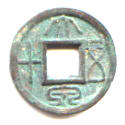 Wang Mang
arranged to have himself appointed regent for the young Han Emperor in
7AD. Two years later he murdered the boy, usurped the throne and
founded the short-lived Xin Dynasty. He attempted major
reforms of China's economy including the abolition of slavery,
introduction of an income tax, redistribution of the land, institution
of price controls, and confiscation of gold. He demonetized
existing coins and instituted new ones based on an unbacked fiat
coinage. Despite the execution and exile of thousands, the reforms were
not accepted. The economy collapsed; there were widespread general
strikes and massive starvation. In 23AD Wang was slain, his "reforms"
were abolished and the Han dynasty restored. This Da Quan Wu
Shi (Ta Ch'ien Wu Shih) coin was introduced in 7AD as part of his
monetary reforms. Though only slightly heavier than the
existing Wu Zhu (Wu Ch'u) that had been in use for 200 years, it was
worth 50 Wu Zhu. As might be expected the merchants did not take too
kindly to this new coin. In 14AD the Ta Chi'en Wu Shih coin
was discontinued and its value reduced from 50 Cash to 1
Cash.
Wang Mang
arranged to have himself appointed regent for the young Han Emperor in
7AD. Two years later he murdered the boy, usurped the throne and
founded the short-lived Xin Dynasty. He attempted major
reforms of China's economy including the abolition of slavery,
introduction of an income tax, redistribution of the land, institution
of price controls, and confiscation of gold. He demonetized
existing coins and instituted new ones based on an unbacked fiat
coinage. Despite the execution and exile of thousands, the reforms were
not accepted. The economy collapsed; there were widespread general
strikes and massive starvation. In 23AD Wang was slain, his "reforms"
were abolished and the Han dynasty restored. This Da Quan Wu
Shi (Ta Ch'ien Wu Shih) coin was introduced in 7AD as part of his
monetary reforms. Though only slightly heavier than the
existing Wu Zhu (Wu Ch'u) that had been in use for 200 years, it was
worth 50 Wu Zhu. As might be expected the merchants did not take too
kindly to this new coin. In 14AD the Ta Chi'en Wu Shih coin
was discontinued and its value reduced from 50 Cash to 1
Cash.  The
Western Wei Dynasty was one of many short-lived dynasties that
controlled portions of China during a period of civil war and political
chaos that followed the collapse of the Eastern Han Dynasty in 220AD.
It lasted only from 535 to 557AD and controlled a portion of
north-western China. The dynasty issued a distinctive style of Wu Zhu
(Wu Chu) coin. For many years this coin was attributed to the
subsequent Sui Dynasty (581-618AD) until a hoard of the coins was
discovered in the tomb of Emperor Wen, the first emperor Western Wei.
Dynasty, who died in 550AD.
The
Western Wei Dynasty was one of many short-lived dynasties that
controlled portions of China during a period of civil war and political
chaos that followed the collapse of the Eastern Han Dynasty in 220AD.
It lasted only from 535 to 557AD and controlled a portion of
north-western China. The dynasty issued a distinctive style of Wu Zhu
(Wu Chu) coin. For many years this coin was attributed to the
subsequent Sui Dynasty (581-618AD) until a hoard of the coins was
discovered in the tomb of Emperor Wen, the first emperor Western Wei.
Dynasty, who died in 550AD. The
K'ai Yuan coin was introduced by Chinese Emperor Kao Tsu, who founded
the Tang Dyansty in 618AD. The coins replaced the previously
used Wu-Chu and other coins. The high quality of the coins
and excellent calligraphy set a standard for Chinese coins for the next
1000 years! The legend on the coin, K'ai Yuan Tung
Pao translates as "precious currency of the K'ai Yuan
era". The Tang Dynasty was a brilliant period in
Chinese history. It was an era of great prosperity and
artistry. The K'ai Yuan coin continued to be issued
for the next 300 years, until the collapse of the Dynasty in
907AD. During much of the dynasty the coin was the
only denomination struck. Because of the relatively low value
of the coin and the high level of commerce a LOT of the coins were
issued during that period. (Think of doing all your transactions with
only pennies!) As a result the coin, though over
1000 years old, is still plentiful and inexpensive.
The
K'ai Yuan coin was introduced by Chinese Emperor Kao Tsu, who founded
the Tang Dyansty in 618AD. The coins replaced the previously
used Wu-Chu and other coins. The high quality of the coins
and excellent calligraphy set a standard for Chinese coins for the next
1000 years! The legend on the coin, K'ai Yuan Tung
Pao translates as "precious currency of the K'ai Yuan
era". The Tang Dynasty was a brilliant period in
Chinese history. It was an era of great prosperity and
artistry. The K'ai Yuan coin continued to be issued
for the next 300 years, until the collapse of the Dynasty in
907AD. During much of the dynasty the coin was the
only denomination struck. Because of the relatively low value
of the coin and the high level of commerce a LOT of the coins were
issued during that period. (Think of doing all your transactions with
only pennies!) As a result the coin, though over
1000 years old, is still plentiful and inexpensive. Sindh
(Sind) is located in what is now the south-eastern portion of
Pakistan. The Habbaris were Arab traders and merchants that
settled in Sindh in pre-Islamic times. Despite living in
India for hundreds of years and marrying locals, they maintained their
Arab identity, language and customs. By the mid 9th century
AD they were able to assert control over Sindh, paying only nominal
allegiance to the Abbasid Caliph. The coinage of the Habbarids of Sind
(also known as the Amirs of Sindh) consisted of small (10 to
11mm) silver Dammas (Dhammas) that feature Arabic inscriptions on both
sides. In 1026 Ghaznavid Sultan Mahmud conquered
Sindh.
Sindh
(Sind) is located in what is now the south-eastern portion of
Pakistan. The Habbaris were Arab traders and merchants that
settled in Sindh in pre-Islamic times. Despite living in
India for hundreds of years and marrying locals, they maintained their
Arab identity, language and customs. By the mid 9th century
AD they were able to assert control over Sindh, paying only nominal
allegiance to the Abbasid Caliph. The coinage of the Habbarids of Sind
(also known as the Amirs of Sindh) consisted of small (10 to
11mm) silver Dammas (Dhammas) that feature Arabic inscriptions on both
sides. In 1026 Ghaznavid Sultan Mahmud conquered
Sindh.
 At
its peak the Ghaznavids controlled a vast central Asian empire that
included Afghanistan, Pakistan, northern India as well as parts of Iran
and Turkmenistan. The founder of the dynasty was Sabuktekin
(Sabuktigin). In his youth he was captured in a tribal war
and sold as a slave. He was eventually purchased by Alptigin,
the governor of Ghazna, who so recognized his potential. He
later married the Alptgin's daughter. In 977 he
became governor of Ghazna, which became a semi-independent kingdom
within the Samanid Empire. He expanded his kingdom,
conquering much of which is now Afghanistan. He died in 997
after becoming sick on a military campaign. His son Mahmud,
declared full independence and further expanded the
territory. This silver dirham of Sabuktigin was struck at
Farwan in Afghanistan. One side cites the Shada (There is no
God but Allah and Mohammed is his messenger). The other side
acknowledges his Samanid overlord and the Abbasid Caliph. The
silver coin is approximately 17mm.
At
its peak the Ghaznavids controlled a vast central Asian empire that
included Afghanistan, Pakistan, northern India as well as parts of Iran
and Turkmenistan. The founder of the dynasty was Sabuktekin
(Sabuktigin). In his youth he was captured in a tribal war
and sold as a slave. He was eventually purchased by Alptigin,
the governor of Ghazna, who so recognized his potential. He
later married the Alptgin's daughter. In 977 he
became governor of Ghazna, which became a semi-independent kingdom
within the Samanid Empire. He expanded his kingdom,
conquering much of which is now Afghanistan. He died in 997
after becoming sick on a military campaign. His son Mahmud,
declared full independence and further expanded the
territory. This silver dirham of Sabuktigin was struck at
Farwan in Afghanistan. One side cites the Shada (There is no
God but Allah and Mohammed is his messenger). The other side
acknowledges his Samanid overlord and the Abbasid Caliph. The
silver coin is approximately 17mm. The
Bull and Horseman Jital was introduced by the Hindu Kings in Kabul and
Ohind (now Afghanistan and Pakistan) in the 9th century. One
side featured a humped bull. The other side a man on a horse
holding a lance. The coins became the standard for much of
Afghanistan and northern India. It continued to be struck for
hundreds of years by neighboring and successive kingdoms. It gradually
become cruder and more debased as each generation would copy the design
from coins found in circulation. These Bull and Horseman
Jitals date from around the 10th to 11th century. They are
made of debased silver and feature crude line drawings of the bull and
horseman. I do not have the time or patience to do an exact
attribution so am letting them go cheap.
The
Bull and Horseman Jital was introduced by the Hindu Kings in Kabul and
Ohind (now Afghanistan and Pakistan) in the 9th century. One
side featured a humped bull. The other side a man on a horse
holding a lance. The coins became the standard for much of
Afghanistan and northern India. It continued to be struck for
hundreds of years by neighboring and successive kingdoms. It gradually
become cruder and more debased as each generation would copy the design
from coins found in circulation. These Bull and Horseman
Jitals date from around the 10th to 11th century. They are
made of debased silver and feature crude line drawings of the bull and
horseman. I do not have the time or patience to do an exact
attribution so am letting them go cheap. Muhammad bin Tughluq, the Sultan of
Delhi ruled much of India from 1325 to 1351AD. He was a
scholar, calligrapher and an innovative monarch. Because he often did
not consider the consequences of his innovations, he became known as
"The Mad Sultan". Vast amounts of his treasury were spent trying to
expand and consolidate his realm. This encouraged numerous
revolts from those that did not want to be
subjugated. He forcibly moved his entire capital
and all its inhabitants from Delhi to the Deccan of central
India. Unfortunately, there was insufficient water
to support the population. After great suffering and loss of
life he returned the capital to Delhi two years later. About
1330AD he tried to replace the silver Tanka with this brass Tanka, in
an effort to boost his treasury. The brass Tanka
has beautiful calligraphy on both sides, with legends to encourage its
citizens to accept the debased currency. His unhappy citizens, required
to accept this token coinage, soon started to counterfeit them in vast
numbers. Foreign traders would not accept the brass
Tankas. In 1333 he was forced to return to the silver Tanka,
redeeming both real and fake brass Tankas at a great cost to his
treasury. It is reported that a “mountain” of these brass
Tankas remained lying outside the sultanate’s treasuries for over a
century. The coins grade Fine to Very Fine and have a light green
patina.
Muhammad bin Tughluq, the Sultan of
Delhi ruled much of India from 1325 to 1351AD. He was a
scholar, calligrapher and an innovative monarch. Because he often did
not consider the consequences of his innovations, he became known as
"The Mad Sultan". Vast amounts of his treasury were spent trying to
expand and consolidate his realm. This encouraged numerous
revolts from those that did not want to be
subjugated. He forcibly moved his entire capital
and all its inhabitants from Delhi to the Deccan of central
India. Unfortunately, there was insufficient water
to support the population. After great suffering and loss of
life he returned the capital to Delhi two years later. About
1330AD he tried to replace the silver Tanka with this brass Tanka, in
an effort to boost his treasury. The brass Tanka
has beautiful calligraphy on both sides, with legends to encourage its
citizens to accept the debased currency. His unhappy citizens, required
to accept this token coinage, soon started to counterfeit them in vast
numbers. Foreign traders would not accept the brass
Tankas. In 1333 he was forced to return to the silver Tanka,
redeeming both real and fake brass Tankas at a great cost to his
treasury. It is reported that a “mountain” of these brass
Tankas remained lying outside the sultanate’s treasuries for over a
century. The coins grade Fine to Very Fine and have a light green
patina. This
11mm silver Qirat was struck for Ali ibn Yusuf who ruled the Almoravid
kingdom from 1106-1142. The Almoravids were a Berber Muslim
dynasty that ruled Morocco and southern Spain. Early in his
reign
Ali had military gaining territory in Spain. He eventually
found
his forces overextended across Spain and Africa with insufficient
revenue to support the government and military. The
imposition of
additional taxes cost him much needed local support. With the
growing strength of the Christian kingdoms in Spain, the Almohads in
the Maghreb, and the death of skilled commanders, he began losing
significant territory. In 1138 Almoravids were defeated by
Alfonso VII of Leon and Castile. In 1139 Alfonso I of
Portugal
won independence for the Kingdom of Portugal in the Battle of
Ourique. After Ali's death in 1142 the dynasty continued its
decline and completely collapsed in 1147.
This
11mm silver Qirat was struck for Ali ibn Yusuf who ruled the Almoravid
kingdom from 1106-1142. The Almoravids were a Berber Muslim
dynasty that ruled Morocco and southern Spain. Early in his
reign
Ali had military gaining territory in Spain. He eventually
found
his forces overextended across Spain and Africa with insufficient
revenue to support the government and military. The
imposition of
additional taxes cost him much needed local support. With the
growing strength of the Christian kingdoms in Spain, the Almohads in
the Maghreb, and the death of skilled commanders, he began losing
significant territory. In 1138 Almoravids were defeated by
Alfonso VII of Leon and Castile. In 1139 Alfonso I of
Portugal
won independence for the Kingdom of Portugal in the Battle of
Ourique. After Ali's death in 1142 the dynasty continued its
decline and completely collapsed in 1147. Bohemond
III of the Crusader Principality of Antioch, also known as Bohemond the
Child and Bohemond the Stammerer, ascended to the throne in
1163. He then exiled his mother who had served as his regent
since he was age one. .In 1180 he deserted his wife in favor of Sibyl,
who may have been a spy for Saladin This led to an escalating
stuggle with the Church. Bohemond was excommunicated. In retaliation he
confiscated the church's property, which led to an Antioch placed under
interdict, which then led to armed conflicts. The conflict
was partially solved through mediation and the leaders of the
opposition fled to Cilician Armenia. In 1185 he invited the
king Roupen III of Cilician Armenia to a banquet but imprisoned him
instead. He then invaded Cilician Armenia. A peace
treaty was signed which released the Roupen in return for a large
ransom, Roupon acknowledging Bohemond's suzerainty and giving Bohemond
territory. Upon his release Roupon promptly recaptured the
territory. In 1194 Cilician Armenian
King Levon I (Leo) invited Bohemond to
negotiate over a castle Leo had captured, but instead took Bohemond
prisoner. Bohemond was released after giving up claims on
Armenia. Bohemond was involved in the disputes over the
dynastic succession of the Crusader Kingdom of Jerusalem, which led to
Saladin's capture of Jerusalem in 1187. In 1188 Saladin captured much
of northern Syria, and forced surrender of fortresses of the Knights
Templar. Bohemond pleaded for a truce, which Saladin granted,
but left him only with his capital and its port. The Third
Crusade was called in 1189 in an attempt to recapture
Jerusalem. During the Crusade Bohemond twice met with Richard
the Lionheart, but did not provide any military assistance to
the
Crusaders. Upon Bohemond's death in 1201, a series of wars
broke out among his successors over control of his territory. This was
not resolved until 1219. The obverse of this silver Denier of
Antioch a crude portrait of Bohemond III wearing a helmet and chain
mail. A crescent moon is to the left and a star to the right.
The reverse features a cross and a crescent. It is
an historic coin from what was an important Crusader kingdom.
Bohemond
III of the Crusader Principality of Antioch, also known as Bohemond the
Child and Bohemond the Stammerer, ascended to the throne in
1163. He then exiled his mother who had served as his regent
since he was age one. .In 1180 he deserted his wife in favor of Sibyl,
who may have been a spy for Saladin This led to an escalating
stuggle with the Church. Bohemond was excommunicated. In retaliation he
confiscated the church's property, which led to an Antioch placed under
interdict, which then led to armed conflicts. The conflict
was partially solved through mediation and the leaders of the
opposition fled to Cilician Armenia. In 1185 he invited the
king Roupen III of Cilician Armenia to a banquet but imprisoned him
instead. He then invaded Cilician Armenia. A peace
treaty was signed which released the Roupen in return for a large
ransom, Roupon acknowledging Bohemond's suzerainty and giving Bohemond
territory. Upon his release Roupon promptly recaptured the
territory. In 1194 Cilician Armenian
King Levon I (Leo) invited Bohemond to
negotiate over a castle Leo had captured, but instead took Bohemond
prisoner. Bohemond was released after giving up claims on
Armenia. Bohemond was involved in the disputes over the
dynastic succession of the Crusader Kingdom of Jerusalem, which led to
Saladin's capture of Jerusalem in 1187. In 1188 Saladin captured much
of northern Syria, and forced surrender of fortresses of the Knights
Templar. Bohemond pleaded for a truce, which Saladin granted,
but left him only with his capital and its port. The Third
Crusade was called in 1189 in an attempt to recapture
Jerusalem. During the Crusade Bohemond twice met with Richard
the Lionheart, but did not provide any military assistance to
the
Crusaders. Upon Bohemond's death in 1201, a series of wars
broke out among his successors over control of his territory. This was
not resolved until 1219. The obverse of this silver Denier of
Antioch a crude portrait of Bohemond III wearing a helmet and chain
mail. A crescent moon is to the left and a star to the right.
The reverse features a cross and a crescent. It is
an historic coin from what was an important Crusader kingdom. About
1198 Levon I (also called Leo II, Leon II and Levon the Magnificant)
was crowned as the first king of Cilcian Armenia. He had
ruled
the territory as Lord of Armenia since 1187, after his brother was
captured by Bohemond III of Antioch
and
retired to a monastery. As king he had the privilege of issuing the
first Armenian coins since ancient times. He established a
powerful Christian kingdom and was a strong supporter of the Third
Crusade. He had numerous intrigues and conflicts with Bohemond III of Antioch,
at one point taking him and his family prisoner after inviting them to
castle. He was later involved in the War of the Antiochene Succession
after Bohemond's death. He joined Richard
the Lion Heart in
the
conquest of Cyprus and was actively involved in the numerous political
plots and intrigues of the Crusader kingdoms and neighboring
kingdoms. These crude silver Trams are approximately 22mm in
diameter. One side pictures King Levon seated upon
his
throne. The reverse shows a lion and leopard with a
cross.
It is an historic Armenian coin with a close connection to the
Crusades.
About
1198 Levon I (also called Leo II, Leon II and Levon the Magnificant)
was crowned as the first king of Cilcian Armenia. He had
ruled
the territory as Lord of Armenia since 1187, after his brother was
captured by Bohemond III of Antioch
and
retired to a monastery. As king he had the privilege of issuing the
first Armenian coins since ancient times. He established a
powerful Christian kingdom and was a strong supporter of the Third
Crusade. He had numerous intrigues and conflicts with Bohemond III of Antioch,
at one point taking him and his family prisoner after inviting them to
castle. He was later involved in the War of the Antiochene Succession
after Bohemond's death. He joined Richard
the Lion Heart in
the
conquest of Cyprus and was actively involved in the numerous political
plots and intrigues of the Crusader kingdoms and neighboring
kingdoms. These crude silver Trams are approximately 22mm in
diameter. One side pictures King Levon seated upon
his
throne. The reverse shows a lion and leopard with a
cross.
It is an historic Armenian coin with a close connection to the
Crusades.  Ivan
Sratsimir was the last king of the medieval Bulgarian
Kingdom. He reigned from the city of Vidin from 1356, until
he was
captured and killed by the Ottoman Turks in 1396.
One side of this 16mm silver Grosch depicts the bust of Christ,
blessing with his right hand and holding the Gospel in his
left. To his right and left is the Christogram "IC –
XC". The other side depicts the king seated on
his throne
holding a scepter in his right hand. The coin shows little if
any wear, but is rather crudely struck.
Ivan
Sratsimir was the last king of the medieval Bulgarian
Kingdom. He reigned from the city of Vidin from 1356, until
he was
captured and killed by the Ottoman Turks in 1396.
One side of this 16mm silver Grosch depicts the bust of Christ,
blessing with his right hand and holding the Gospel in his
left. To his right and left is the Christogram "IC –
XC". The other side depicts the king seated on
his throne
holding a scepter in his right hand. The coin shows little if
any wear, but is rather crudely struck.  This
silver Grosso was issued for Antonio Venier who was Doge of the
Venetian Republic from 1382 until his death in 1400. Under
his rule Venice acquired numerous Mediterranean islands, including
Corfu and most of Cyclades and Dodecanese. He became renowned for his
sense of justice after allowing his own son to die in prison for his
crimes. One side of the coin depicts Jesus Christ seated upon
a throne. The other side shows St. Mark, the patron saint of
Venice, handing the doge a banner.
This
silver Grosso was issued for Antonio Venier who was Doge of the
Venetian Republic from 1382 until his death in 1400. Under
his rule Venice acquired numerous Mediterranean islands, including
Corfu and most of Cyclades and Dodecanese. He became renowned for his
sense of justice after allowing his own son to die in prison for his
crimes. One side of the coin depicts Jesus Christ seated upon
a throne. The other side shows St. Mark, the patron saint of
Venice, handing the doge a banner.  This
silver Bracteate Hohlpfennig was issued by
Friedrich II (Frederick II) who was the
Prince-Elector of the
Margravate of Brandenburg from
1440 to 1470. It is believed that he was nicknamed "The Irontooth" or
"The
Iron" due to his great strength and power. Friedrich
strengthened Brandenburg forming the basis of what was to become
Prussia and the German Empire. The rights of the towns and
nobility were curtailed and he regained Neumark (East Brandenburg) from
the Teutonic Knights. The citizens of Berlin revolted when he
attempted to build a palace on Colin island in the Spree
river. Friedrich prevailed, built the castle that became the
Stadtschloss (Berlin Palace), and the rights of the city were greatly
curtailed. The Stadtschloss was torn down by East Germany in the 1950's
and is now being rebuilt. The silver Bracteate Hohlpfennig is
an extremely thin and single sided coin wtih a raised rim.
The
design is
embossed from the reverse. This coin is approximately 16mm in
diameter and features an eagle with outstretched wings.
Because the coins are so thin and fragile, few survive today.
This
silver Bracteate Hohlpfennig was issued by
Friedrich II (Frederick II) who was the
Prince-Elector of the
Margravate of Brandenburg from
1440 to 1470. It is believed that he was nicknamed "The Irontooth" or
"The
Iron" due to his great strength and power. Friedrich
strengthened Brandenburg forming the basis of what was to become
Prussia and the German Empire. The rights of the towns and
nobility were curtailed and he regained Neumark (East Brandenburg) from
the Teutonic Knights. The citizens of Berlin revolted when he
attempted to build a palace on Colin island in the Spree
river. Friedrich prevailed, built the castle that became the
Stadtschloss (Berlin Palace), and the rights of the city were greatly
curtailed. The Stadtschloss was torn down by East Germany in the 1950's
and is now being rebuilt. The silver Bracteate Hohlpfennig is
an extremely thin and single sided coin wtih a raised rim.
The
design is
embossed from the reverse. This coin is approximately 16mm in
diameter and features an eagle with outstretched wings.
Because the coins are so thin and fragile, few survive today.

 Suleiman the Magnificent
(Suleyman I) ruled the Ottoman Empire from 1520 to 1566.
During his long reign he greatly expanded his empire, conquering much
of the Middle East, North Africa, most of Hungary and laid siege to
Vienna twice. He instituted major reforms in education,
taxation and criminal law. He was an accomplished poet,
goldsmith and patron of the arts. This
silver Medini (3 Akces) of Suleiman was struck at the Amid mint, in
what is now Diyabakir in Turkey. Diyabakir, located on the Tigris River
is considered the "un-proclaimed capital of so-called Turkish
Kurdistan". The silver coin is approximately 13mm in diameter
and is dated AH926 (1520AD). It is an historic coin of an
historic monarch.
ANCIENT
AND MEDIEVAL COINS OF AFGHANISTAN ANCIENT
AND MEDIEVAL COINS OF INDIA and PAKISTAN MEDIEVAL COINS OF
THE MIDDLE EAST ANCIENT AND MEDIEVAL CHINESE
COINS TABLE OF
CONTENTS FOR THE INTERESTING STUFF CATALOG
ALPHABETICAL LISTING OF
COINS AND BANKNOTES IN THE INTERESTING STUFF CATALOGWEB SITE MAP & SEARCH
ENGINESECURE ON-LINE CREDIT CARD ORDER PAGE
ORDERING INFORMATION
Suleiman the Magnificent
(Suleyman I) ruled the Ottoman Empire from 1520 to 1566.
During his long reign he greatly expanded his empire, conquering much
of the Middle East, North Africa, most of Hungary and laid siege to
Vienna twice. He instituted major reforms in education,
taxation and criminal law. He was an accomplished poet,
goldsmith and patron of the arts. This
silver Medini (3 Akces) of Suleiman was struck at the Amid mint, in
what is now Diyabakir in Turkey. Diyabakir, located on the Tigris River
is considered the "un-proclaimed capital of so-called Turkish
Kurdistan". The silver coin is approximately 13mm in diameter
and is dated AH926 (1520AD). It is an historic coin of an
historic monarch.
ANCIENT
AND MEDIEVAL COINS OF AFGHANISTAN ANCIENT
AND MEDIEVAL COINS OF INDIA and PAKISTAN MEDIEVAL COINS OF
THE MIDDLE EAST ANCIENT AND MEDIEVAL CHINESE
COINS TABLE OF
CONTENTS FOR THE INTERESTING STUFF CATALOG
ALPHABETICAL LISTING OF
COINS AND BANKNOTES IN THE INTERESTING STUFF CATALOGWEB SITE MAP & SEARCH
ENGINESECURE ON-LINE CREDIT CARD ORDER PAGE
ORDERING INFORMATION